5 Hidden Features of the Model O You Must Know About
Introduction
The Model O has become a household name among competitive gamers and precision-focused users for its featherweight shell and aggressive value proposition. Beyond the obvious honeycomb design and RGB lighting, there are several underappreciated features and design decisions that meaningfully affect daily use, performance, and long-term satisfaction. This article explores five of those hidden features, explains why they matter in real-world scenarios, and provides an in-depth review, pros & cons, a compact comparison, and a practical buying guide aimed at buyers who care about control, comfort, and longevity.
Five Hidden Features Explained
1. Tunable Lift-Off and Polling Behavior via Software
Many users assume a mouse either works or it does not, but the Model O offers software-adjustable parameters that influence how the sensor behaves during play. The configuration utility allows adjustment of lift-off distance (LOD) and polling rate. A lower LOD prevents unwanted cursor movement when lifting the mouse during flick shots or repositioning; a higher polling rate reduces input latency but increases CPU attention.
Real-world use case: an FPS player who executes frequent flicks benefits from a low LOD to prevent micro-corrections when repositioning the mouse. A content creator who frequently moves between monitors may prefer a slightly raised LOD to avoid accidental cursor jumps when lifting and placing the mouse back down.
2. Ascended Cord and Cable Behavior That Mimics Wireless
The Model O’s cable (often referred to as a "paracord" or "Ascended Cord" in community discussions) is designed to be exceptionally flexible and light. The significance is subtle but profound: cable drag is one of the biggest ergonomic and performance headaches with wired mice. A stiff cable causes resistance that translates into inconsistent aim and more muscle effort over long sessions.
Real-world use case: marathon gaming sessions and long creative workflows benefit from a cable that behaves like a detached tether — the mouse moves freely, reducing wrist fatigue and improving fine control.
3. Ultra-Smooth PTFE Skates with Easy Maintenance
Skates (mouse feet) are a small physical detail that has outsized influence on glide and sensor readings. The Model O ships with high-quality PTFE skates that offer low friction and consistent tracking on most cloth and hard pads. Because the skates are relatively easy to replace or modify, users who care about glide can maintain nearly-new performance for years.
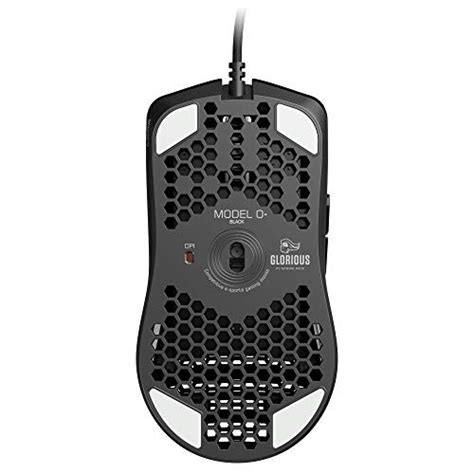
Real-world use case: tournament players who switch between different surface types often appreciate predictable glide. Being able to swap skates quickly keeps feel consistent without needing a whole new mouse.
4. Ambidextrous Shape with a Competitive Tilt Toward Right-Handers
Although the Model O is often discussed as a gaming mouse rather than a left-handed or right-handed exclusive, its symmetrical outline makes it usable for both hands. The subtle placement of side buttons and the contouring tilt slightly toward right-handed ergonomics, which many right-handed users find optimal for claw and fingertip grip styles.
Real-world use case: left-handed users who prefer symmetrical shapes but require side buttons may find the Model O workable with minor muscle memory adjustments. Tournament teams with mixed handedness can standardize on one model for practice without always needing distinct hardware.
5. Vibrant Modding and Aftermarket Community Support
One hidden advantage of the Model O is the community and modability surrounding it. Enthusiasts routinely modify skates, tune switches, paracord cables, and even change internal dampening to alter click feel. The availability of replacement parts and third-party mods extends the device's life and allows users to tailor a machine to specific playstyles.
Find top-rated Electronics products at great prices.
See Deals →Real-world use case: a semi-professional player who wants a slightly lighter click or different tactile feedback can customize switches or add foam dampening to eliminate hollow sounds, achieving a personalized feel without buying an entirely new product.
Detailed Product Review and Analysis
The Model O’s strength lies in blending lightweight ergonomics with practical features that meet competitive demands. Below is an analysis covering build, sensor performance, software, ergonomics, and long-term considerations.
Build Quality and Materials
The distinctive honeycomb shell is not merely aesthetic; it reduces weight significantly while maintaining rigidity. Where many ultralight mice sacrifice structural integrity for low mass, the Model O finds a balance—users report minimal flex under normal grip force. The shell finish tends to be smooth and slightly glossy on many units, which suits rapid movements and prevents excessive sweat adhesion during extended sessions.
Sensor and Tracking Performance
The Model O uses a high-performing optical sensor from the PixArt family (a category widely used in competitive mice). What matters most to users is consistent tracking without jitter or angle snapping. The Model O delivers reliable performance across a broad range of speeds and lift-off heights, making it appropriate for twitchy FPS play, precision design work, and general desktop use.
Switches, Buttons, and Scroll Wheel
Primary click feel on the Model O is crisp with low actuation travel — a responsiveness that competitive users appreciate. Side buttons have a firm tactile response but are sized and placed for quick thumb access rather than accidental activation. The scroll wheel provides distinct detents for predictable scrolling.
Software and Customization
The configuration suite provides DPI steps, RGB control, button remapping, and the previously mentioned LOD and polling adjustments. Profiles are stored in software, so users should confirm whether they require onboard memory for profile portability. For many buyers, the software strikes a reasonable balance between functionality and simplicity.
Ergonomics: Grip Styles and Hand Sizes
The Model O favors claw and fingertip grips due to its low-slung profile and narrow width. Larger-handed users who palm grip may find it less supportive than wider designs, while small- to medium-hand users often praise the agility the shape affords. Left-handed users can use the mouse, but side button accessibility remains right-side oriented on many variants.
Longevity and Maintenance
Because of the accessible skates, modular community parts, and durable sensors, the Model O is a device that stays serviceable. Routine maintenance—cleaning the skates and sensor window, replacing worn feet, and swapping cables or switches if desired—can significantly extend useful life.
Pros & Cons
- Pros:
- Extremely lightweight construction reduces fatigue and improves aim control.
- Flexible cable design minimizes drag, approaching a wireless-like feel at a lower price.
- High-quality PTFE skates offer smooth, consistent glide across surfaces.
- Configurable software settings (DPI, LOD, polling) allow fine-tuning for multiple use cases.
- Strong aftermarket and modding community for personalized adjustments.
- Cons:
- Honeycomb shell may collect dust; not ideal for users who prefer sealed designs.
- Symmetrical shape with side buttons only on one side is not fully ambidextrous.
- Lower-profile design can feel less supportive for large-palm users.
- Software-based profiles may be limiting if onboard memory is absent or minimal.
Quick Comparison Table
| Feature | Model O | Typical Ultralight Competitor | Traditional Ergonomic Mouse |
|---|---|---|---|
| Primary focus | Competitive speed and low weight | Weight reduction and minimal latency | Comfort and palm support |
| Shell | Honeycomb, lightweight | Often honeycomb or skeletonized | Sealed, larger surface area |
| Cable | Flexible paracord-like cable | Paracord or wireless | Standard thicker cable |
| Software customization | Full-featured (DPI, LOD, RGB, macros) | Varies; high-end competitors match features | Basic to moderate |
| Best grip styles | Claw, fingertip | Claw, fingertip | Palm |
| Community mod support | Strong | Moderate to strong | Low |
Buying Guide: What to Consider Before Choosing the Model O
When evaluating whether the Model O is the right mouse, assess the following factors that matter most to buyers.
Discover deals on Electronics — updated daily.
See Deals →1. Weight and Playstyle
Buyers who prioritize fast, flick-heavy gameplay or who experience wrist fatigue will appreciate a light mouse. If the primary use is long-form productivity or palm-heavy grips, an ultralight design may feel less comfortable.
2. Grip Type and Hand Size
Measure hand length and try to match a mouse shape to the intended grip. The Model O favors claw and fingertip grips; palm grippers should test the fit first, ideally using a similar-shaped device in a store or from a friend.
3. Surface and Glide Preference
Consider the mousepad and desk surface. The Model O’s PTFE skates glide particularly well on cloth pads and high-quality hard pads. If a smoother glide is desired, replacement skates and pad choices make a larger difference than alternates in the same weight class.
4. Wired vs Wireless Considerations
The wired Model O’s cable is designed to reduce drag, but those who prize absolute wireless convenience may opt for a wireless alternative. Wireless models often close the latency gap significantly, though they typically cost more and may involve battery management requirements.
5. Software Needs and Profile Portability
Buyers who switch systems often should verify if profile settings are stored onboard or require the software to be installed on each PC. Professional environments and tournament play sometimes mandate software-free setups, so onboard memory can be a decisive feature.
6. Durability and Maintenance
Check the warranty and the availability of replacement parts. The Model O’s popularity means that skates, cables, and other consumables are widely available, which reduces the total cost of ownership over time.
7. Modding and Community Resources
For buyers who enjoy customizing hardware, a large community and clear guides can make a product far more valuable. Tutorials for switch swaps, internal foam mods, and cable replacements help users tune the device precisely to their tastes.
Conclusion
The Model O stands out not only for its immediate, visible traits—lightweight honeycomb shell and gaming-focused aesthetics—but also for subtle, practical features that influence everyday use. Adjustable lift-off behavior, a low-drag cable, premium skates, a near-ambidextrous shape, and a thriving modding ecosystem are the hidden strengths that make the Model O more than a simple entry-level gaming mouse. Buyers who care about precision, responsiveness, and the ability to tailor their device will find a lot to appreciate. Conversely, those who prioritize a sealed, plush palm rest or a fully ambidextrous button layout may wish to compare alternatives. Ultimately, the Model O is a compelling choice for competitive-minded users and anyone who values agility and customization in a compact package.